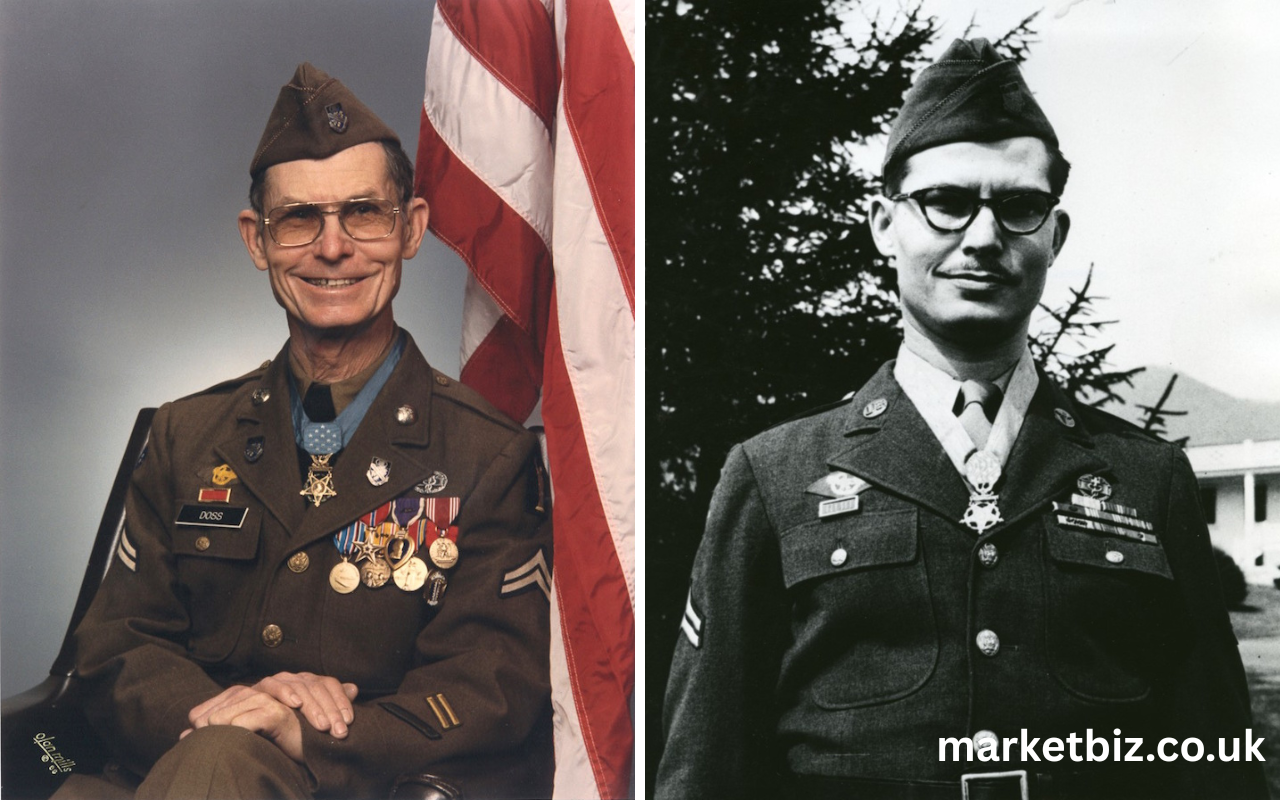
esmond Doss is remembered as one of the most extraordinary heroes of World War II. Known for saving dozens of soldiers during the Battle of Okinawa without carrying a weapon, Doss became the first conscientious objector to receive the Medal of Honor.
Many people search for “desmond doss early life” to understand the experiences that shaped his strong beliefs, courage, and dedication to helping others. His childhood, family environment, and religious upbringing played a major role in shaping the principles he carried throughout his life.
This article explores Desmond Doss’s early life, upbringing, education, family background, and the values that later made him a historic military hero.
Quick Bio
| Detail | Information |
|---|---|
| Full Name | Desmond Thomas Doss |
| Born | February 7, 1919 |
| Birthplace | Lynchburg, Virginia, USA |
| Nationality | American |
| Profession | Combat Medic |
| Known For | Medal of Honor recipient |
| Religion | Seventh-day Adventist |
| Military Service | World War II |
Who Was Desmond Doss?
Desmond Doss was an American Army medic who became famous for his bravery during World War II.
Unlike most soldiers, he refused to carry a weapon because of his religious beliefs. Despite this, he served on the battlefield and saved many lives under dangerous conditions.
His story became internationally known for combining courage with nonviolence.
Desmond Doss Early Life and Childhood
Desmond Doss was born in Lynchburg, Virginia, in 1919. He grew up in a modest household during a difficult economic period in American history.
His childhood was influenced by:
- Strong religious values
- Family discipline
- Hard work and responsibility
- Respect for life
These early influences later shaped his moral decisions during wartime.
Family Background
Doss came from a working-class family.
His father worked in labor-related jobs, while his mother strongly encouraged religious faith and moral discipline at home.
His family environment taught him:
- Compassion toward others
- Importance of honesty
- Self-discipline
- Religious devotion
These values became central to his personality.
Religious Influence in His Early Years
Religion played a major role in Desmond Doss’s upbringing.
He was raised in the Seventh-day Adventist faith, which emphasizes:
- Nonviolence
- Respect for human life
- Faith-based living
- Service to others
This belief system strongly influenced his later refusal to carry weapons during military service.
Childhood Lessons That Shaped Him
Several childhood experiences shaped Doss’s character.
He learned:
- To avoid violence whenever possible
- To value human life deeply
- To remain calm under pressure
- To help people in need
These lessons became essential during wartime rescue missions.
Education and Early Work Life
Desmond Doss attended local schools in Virginia but did not pursue advanced higher education.
Like many young Americans during the Great Depression, he entered the workforce early to support himself and his family.
He worked various jobs that taught him:
- Responsibility
- Patience
- Discipline
- Practical life skills
His work ethic later became visible in military service.
Influence of the Great Depression
Growing up during the Great Depression affected Doss deeply.
The economic struggles of the time taught him:
- Financial discipline
- Humility
- Appreciation for simple living
- Importance of helping communities
These experiences strengthened his resilience.
Moral Values From His Mother
Many historical accounts describe his mother as a major influence on his character.
She encouraged:
- Peaceful behavior
- Religious commitment
- Kindness toward others
- Strong moral decision-making
Doss often credited his upbringing for helping him remain faithful to his beliefs.
Early Interest in Service and Helping Others
Even before military service, Doss showed interest in helping people.
He demonstrated:
- Compassion for injured individuals
- Calmness in stressful situations
- Desire to protect others
- Strong sense of duty
This naturally aligned with the role of a combat medic later in life.
Why He Refused to Carry a Weapon
One of the defining parts of Doss’s life was his refusal to use weapons.
His decision came from:
- Religious beliefs
- Personal moral convictions
- Commitment to nonviolence
- Respect for life
Despite criticism, he remained firm in his beliefs while still serving his country bravely.
Entering Military Service
When World War II began, Doss chose to serve as a medic rather than avoid service completely.
This decision reflected:
- Patriotism
- Desire to save lives
- Commitment to faith
- Courage under pressure
He believed he could contribute by helping wounded soldiers.
Public Reaction to His Beliefs
At first, many fellow soldiers struggled to understand his refusal to carry a weapon.
He faced:
- Criticism
- Isolation
- Doubts about his bravery
- Harsh military training experiences
However, his dedication eventually earned deep respect.
Heroism Rooted in Early Life Values
The bravery Doss later showed in war was deeply connected to his upbringing.
His childhood values of:
- Compassion
- Courage
- Faith
- Selflessness
became visible during battlefield rescues.
Legacy of Desmond Doss
Desmond Doss became a symbol of courage and conviction.
His legacy includes:
- Medal of Honor recognition
- Inspiration for future generations
- Example of faith-based service
- Historical significance in military history
His life story continues to inspire people worldwide.
Why People Still Study His Early Life
People remain interested in Desmond Doss’s early life because it explains:
- How strong values are formed
- The power of moral conviction
- Influence of faith on decisions
- Development of courage and resilience
His childhood experiences help explain the extraordinary actions he later took during war.
READ MORE: Kai Cenat Net Worth 2026: How Much Money Does Kai Cenat Have?
Conclusion
Desmond Doss’s early life played a crucial role in shaping the hero he became during World War II. Raised with strong religious beliefs, discipline, and compassion, Desmond Doss developed values that guided him through some of history’s most dangerous moments.
His story proves that courage does not always come from violence—it can also come from faith, kindness, and an unwavering commitment to protecting human life.
This article is published for informational purposes on marketbiz.